Backflow Prevention 101: Why It Matters for Your Home or Business
You probably don’t think about what’s flowing through your pipes. But the moment water reverses direction—carrying contamination into your drinking supply—suddenly, plumbing becomes urgent. At Dakota Plumbing, we get these emergency calls at all hours: homes and businesses facing real health risks from backflow.
We’ve seen how quickly a small problem turns into a crisis. Let’s break down what backflow is, why it matters, and what you can do to prevent a dangerous situation before it starts.
What Is Backflow? 🚱
Imagine a river running uphill. That’s backflow in your plumbing. Instead of water flowing safely out, something causes it to move backward—pulling dirty water, chemicals, or waste back into clean lines.
This can happen when a sudden drop in water pressure—like a firefighting event or a main break—creates suction. Or when pressure in a boiler, irrigation system, or industrial process pushes contaminants the wrong way.
Every home and business is vulnerable. It’s not just an industrial problem. Even your garden hose can siphon pesticides or bacteria into drinking water if it’s left submerged.
Health & Safety Risks
Backflow is sneaky. You might not see it or taste it, but the consequences can be severe:
- Bacteria & Viruses: Fecal matter, E. coli, or other pathogens can enter your drinking water.
- Chemical Contamination: Fertilizers, cleaning agents, or industrial fluids can back up into the supply.
- Heavy Metals: Lead and other toxic substances may find their way in during a pressure reversal.
- Widespread Impact: One incident can affect a whole block, school, or restaurant.
The US Environmental Protection Agency (EPA) and Centers for Disease Control (CDC) warn that backflow is a leading cause of waterborne disease outbreaks in communities. Protecting your plumbing is protecting your health.
Prevention Devices Explained
Stopping backflow doesn’t have to be complicated. There are special mechanical devices—each with a purpose:
Common Types of Backflow Preventers
- Air Gaps: The simplest method. There’s a physical space between your faucet or fixture and any possible source of contamination (think of the gap between a faucet and a sink).
- Atmospheric Vacuum Breakers (AVB): These prevent backward siphoning in irrigation systems or hose bibs.
- Pressure Vacuum Breakers (PVB): Used outdoors, especially for sprinkler systems.
- Double Check Valve Assemblies (DCVA): Often required for commercial properties and some residential lines.
- Reduced Pressure Principle Assemblies (RPZ): High-level protection for systems at serious risk (factories, hospitals, restaurants).
Choosing the right device depends on your setup. Some are required by law. Others are simply smart prevention.
Testing & Maintenance 🛠️
Backflow preventers aren’t “set and forget.” Over time, moving parts can wear out, and devices can fail. That’s why annual testing is required in many areas—especially for commercial properties or high-risk systems.
What’s Involved?
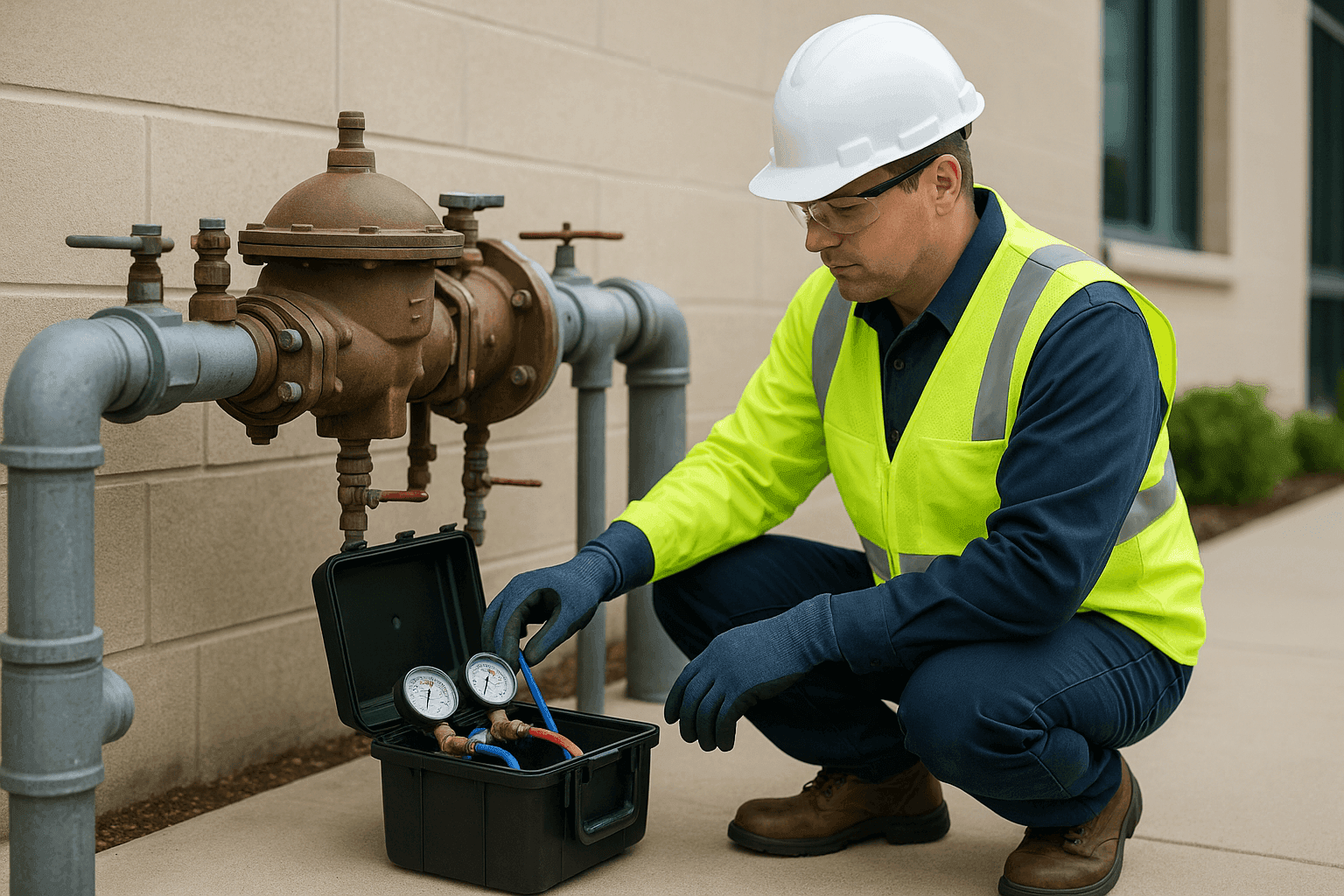
- Inspection: Certified plumbers like Dakota Plumbing check for leaks, corrosion, or damage.
- Performance Test: Special gauges measure if valves are sealing and springs are working.
- Documentation: Results are recorded as required by local codes.
Dakota Plumbing employs certified backflow testers who handle detailed inspections and provide official reports. We even send annual reminders to keep you compliant and safe.
Legal Requirements for Businesses
If you own or manage a commercial property, you’re held to a higher standard. Local plumbing codes—often based on the International Plumbing Code (IPC) and enforced by health departments—require:
- Backflow prevention on all potable (drinking) water lines where contamination is possible.
- Annual or biannual testing by certified professionals.
- Detailed records in case of inspection.
Failing to comply can mean fines, forced shutdowns, or even liability in the event of an outbreak. For restaurants, schools, medical offices, and large facilities, annual certification is not just paperwork—it’s protection for your customers, staff, and business reputation.
Quick Safety Checklist
Want to cut your risk of a plumbing emergency? Here’s what you can do:
- Check that all hose bibs and irrigation lines have working backflow devices.
- Never submerge hoses in pools, buckets, or tanks.
- Schedule annual testing if you own a business or have a sprinkler system.
- Watch for unexplained drops in water pressure—it could be a sign of a bigger problem.
- Keep chemicals and cleaners away from plumbing fixtures and drains.
DIY vs. Call a Pro
Some things are DIY-friendly (like replacing a hose vacuum breaker). But most backflow preventers require specialized knowledge and tools:
- Installation and testing must be done by a certified plumber.
- Improper installation can make the problem worse—or even break local laws.
- Emergency plumbing situations—like a sudden drop in water pressure—call for quick, expert response.
If you’re not sure what’s protecting your water, Dakota Plumbing can help you check.
What Pros Do On Arrival
When Dakota Plumbing shows up—day or night—our process is focused and thorough:
- Assessment: We identify every cross-connection and inspect your existing backflow devices.
- Testing: Using calibrated gauges, we check for leaks, pressure loss, or faulty seals.
- Repair or Replace: If a device fails, we repair or replace it on the spot.
- Documentation: We provide legal paperwork for code compliance.
Our team is trained, certified, and familiar with all major device types—so you get the right fix, fast.
Prevention & Maintenance
Backflow protection isn’t a one-time task. Here’s how to keep your system safe year-round:
- Schedule Regular Testing: Mark your calendar for annual inspections—Dakota Plumbing can remind you.
- Upgrade When Needed: Old or outdated devices should be replaced, especially after renovations.
- Educate Staff: For businesses, make sure everyone who uses water systems knows the basics.
- Stay Informed: Local codes and requirements can change. We stay up to date so you don’t have to.
Costs & Time Factors
How much does backflow prevention cost? It depends, but here’s what to expect:
- Testing: Usually takes under an hour for most properties.
- Repairs/Installation: Can range from a quick fix to a few hours for complex setups.
- Device Costs: Simple vacuum breakers are inexpensive; specialized assemblies are pricier, especially for large commercial systems.
- Annual Upkeep: Regular maintenance avoids bigger, more costly emergencies.
A little prevention beats an expensive shutdown any day.
When It’s an Emergency 🚨
Some plumbing problems can wait. Backflow isn’t one of them. Call for emergency plumbing help if you notice:
- Visible dirty water in sinks, toilets, or fixtures.
- Sudden drop in water pressure, especially after nearby construction or water main breaks.
- Unexplained illness after using tap water.
Dakota Plumbing responds 24/7—because water safety can’t wait.
FAQ
What’s the difference between a backflow preventer and a check valve?
A check valve is a simple, one-way valve. A backflow preventer is a more sophisticated device, designed for higher-risk situations and tested for reliability.
Who needs annual backflow testing?
Businesses, multi-family units, and anyone with irrigation, fire suppression, or commercial kitchens are usually required by law. Some residential systems—especially with pools or sprinkler systems—also need annual checks.
Will insurance cover backflow problems?
Many policies exclude contamination due to backflow, especially if there’s no proof of annual testing. Check with your provider to be safe.
Can I install a backflow preventer myself?
You can install basic vacuum breakers on hoses. All other devices—especially those required by law—must be installed and tested by certified professionals.
Local/Seasonal Considerations
Backflow incidents spike during certain times:
- Spring: Irrigation systems start up, and cross-connections may be exposed.
- Construction Season: Water main breaks and hydrant flushing can cause pressure swings.
- Winter: Freezing pipes can burst and mix contaminated water with clean supplies.
Dakota Plumbing knows local patterns. We’re always on call for sudden pressure changes, seasonal maintenance, and post-storm checkups.
Water should always flow in the right direction—clean, safe, and predictable. Backflow prevention is more than a code requirement; it’s peace of mind for your family, staff, or customers. For certified testing, repairs, or emergency plumbing, Dakota Plumbing is here for you.
Call Dakota Plumbing now — or reach us anytime at 888-853-6782 .